
Scientific Papers
At Andes, we believe that true impact and scalability are built on a foundation of rigorous science and collaboration. Our approach to microbial carbon dioxide mineralization (MCM) for carbon dioxide removal (CDR) is backed by years of research, from controlled laboratory settings to large-scale field trials.
We are committed to scientific rigor and transparency, ensuring that our carbon dioxide removal technology is effective, permanent, and beneficial for soil health.
Below, you will find our latest publications that validate our technology and methodology for carbon dioxide removal.
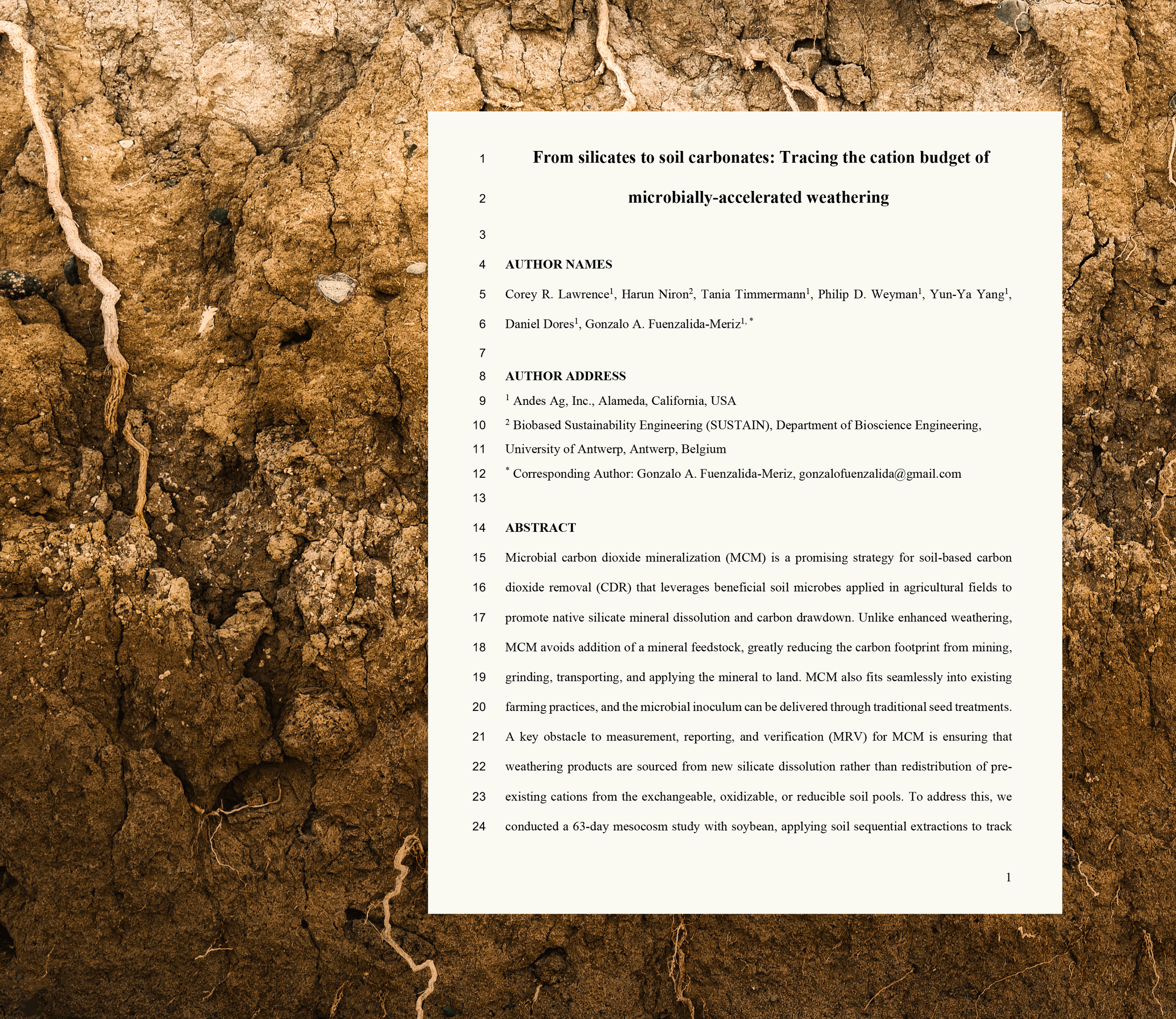
Evidence of microbially accelerated weathering from a laboratory mesocosm experiment with sequential selective dissolution
This manuscript has been submitted for peer review.
This study uses sequential selective soil extractions to trace the fate of base cations released during microbially accelerated silicate weathering. This work validates Andes' CDR approach and confirms that soil inorganic carbon (SIC) measurements are a robust and necessary method for verifying carbon removal.
The preprint is available through the CDRXIV preprint repository and can be downloaded here.
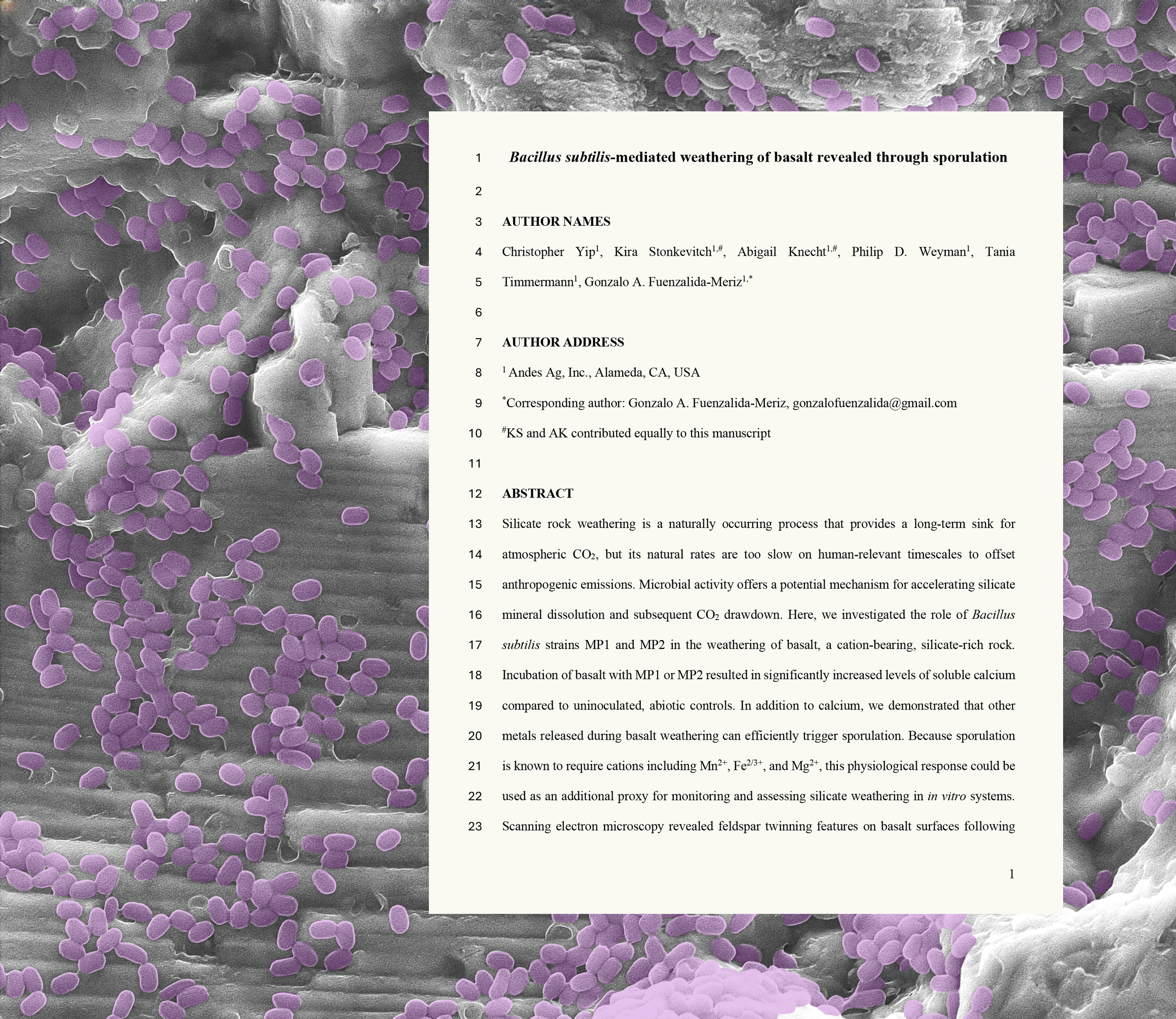
Bacillus subtilis MP1-mediated weathering of basalt revealed through sporulation
This manuscript has been submitted for peer review.
This study establishes bacterial sporulation as a novel biosensor for silicate weathering. The research demonstrates that Andes’ Bacillus subtilis strains MP1 and MP2 actively accelerate basalt dissolution to access essential metals required for spore formation. Using a sporulation-deficient mutant (ΔspoIIE), the work provides robust evidence that microbial activity, rather than abiotic processes alone, drives silicate dissolution, validating a new physiological proxy for monitoring the efficiency of microbially-accelerated silicate weathering.
The preprint is available through the CDRXIV preprint repository and can be downloaded here.
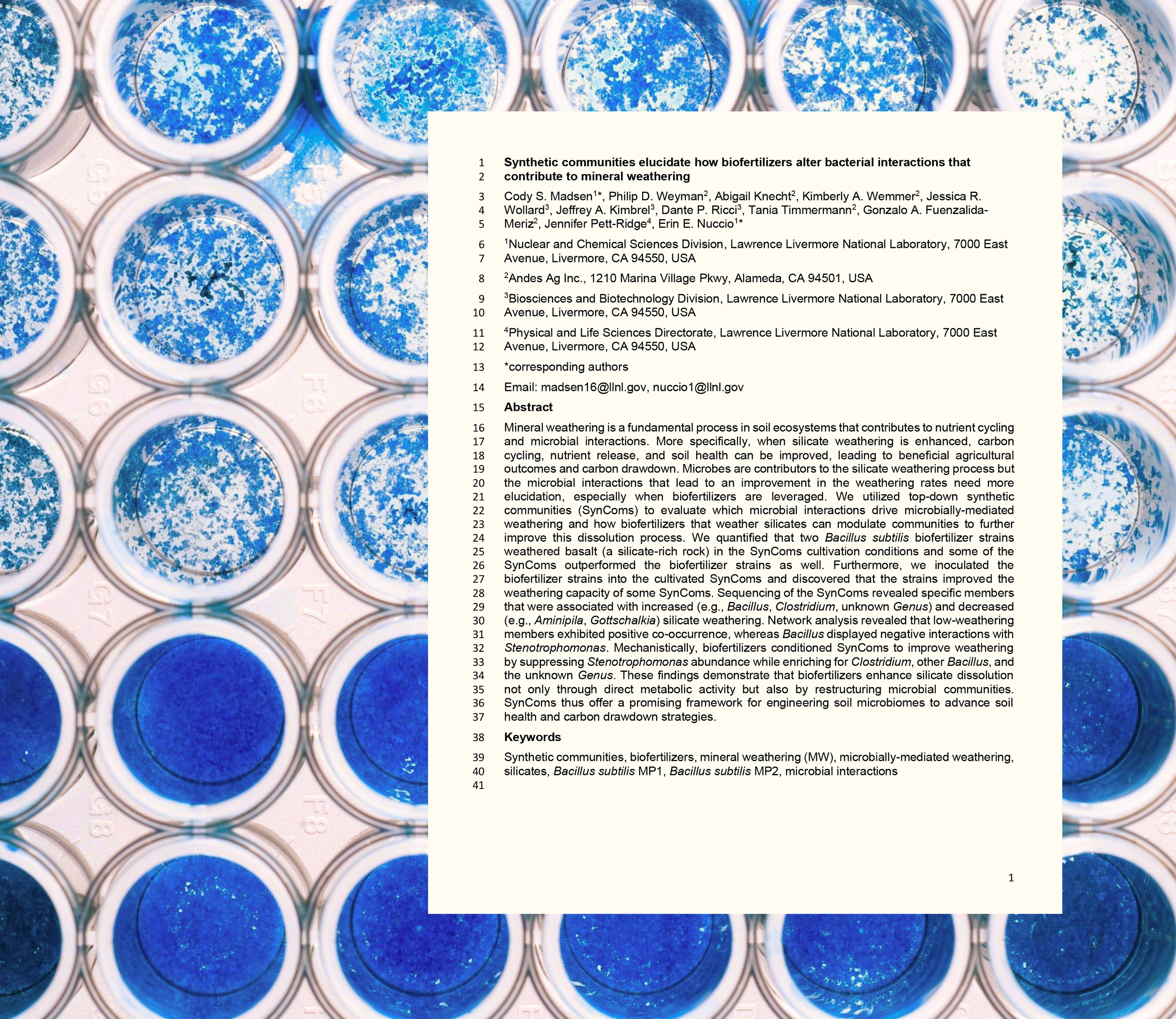
Synthetic communities elucidate how microbial amendments alter bacterial interactions that contribute to mineral weathering
This study, performed by scientists from Lawrence Livermore National Laboratory (LLNL) in partnership with Andes, leverages top-down synthetic communities (SynComs) to disentangle the complex microbial interactions that drive silicate mineral weathering. Led by Dr. Cody Madsen (LLNL), the research demonstrates how Andes’ microbial amendment strains (Bacillus subtilis MP1 and MP2) not only weather minerals directly but also restructure native microbial communities to enhance dissolution rates. By identifying specific bacterial genera associated with improved weathering, this work establishes a framework for engineering soil microbiomes to advance soil health and carbon drawdown strategies.
The preprint will be available soon.

Harnessing Microbes for Scalable Carbon Dioxide Removal in Agricultural Soils
Published in Global Change Biology
Led by Andes’ CTO and Co-Founder, Dr. Tania Timmermann, this foundational paper validates our core carbon dioxide removal (CDR) technology. Through a comprehensive suite of in vitro assays, mesocosm studies, and field trials, we demonstrate how Andes’ beneficial microorganisms accelerate the weathering of native soil silicates. The result is measurable, permanent carbon dioxide removal that integrates seamlessly into existing agricultural systems.
The paper can be downloaded here or accessed for free on the journal’s webpage.
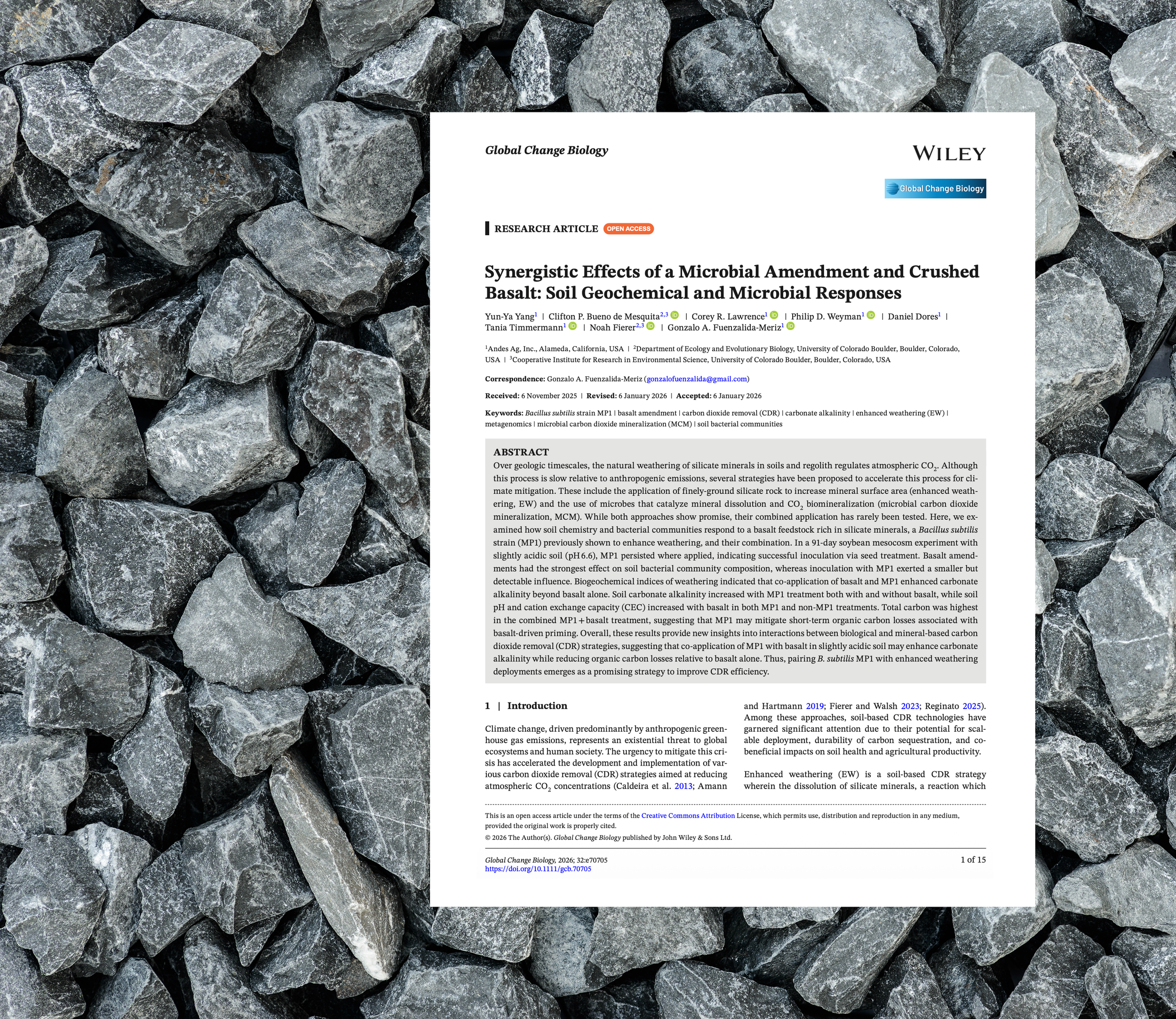
Synergistic Effects of an Andes Microbial Amendment and Crushed Basalt
Published in Global Change Biology
This study explores the powerful synergy between biology and geology. It investigates how co-applying Andes’ proprietary microbial strain (MP1) with crushed basalt significantly enhances carbonate alkalinity while preserving soil organic carbon. Conducted in a soybean mesocosm system, this research is a critical step toward developing scalable, hybrid Carbon Dioxide Removal (CDR) strategies that integrate soil microbiology with enhanced rock weathering.
The paper can be accessed for free on the journal’s webpage or downloaded here.

Precise measurement of soil inorganic carbon (SIC) and dissolved inorganic carbon (DIC)
Published in PLOS One
Accurate measurement is the bedrock of trust in carbon markets. Led by Dr. Chris Yip and Dr. Phil Weyman, this work introduces a novel, high-throughput gas chromatography technique for quantifying inorganic carbon. This method delivers exceptional precision for both solid soil and pore water samples, setting a new standard for measurement, reporting, and verification (MRV) in soil carbon projects.
The paper can be accessed for free on the journal’s webpage or downloaded here.
Our published work is just the beginning. Andes is building a collaborative ecosystem to scale microbial carbon dioxide mineralization globally. Whether you are a researcher, an organization looking to support high-integrity carbon dioxide removal science, or an industry innovator, we want to hear from you. Let’s accelerate the path to scale carbon dioxide removal together.